Verre églomisé, 24k gold leaf, backlighting and UV photopolymerization — the four decorative techniques behind CAworks architectural glass. Traditional craft, held to a repeatable, engineered standard.
Reverse gilding · 24k leaf laid into size
01 — History
Verre églomisé.
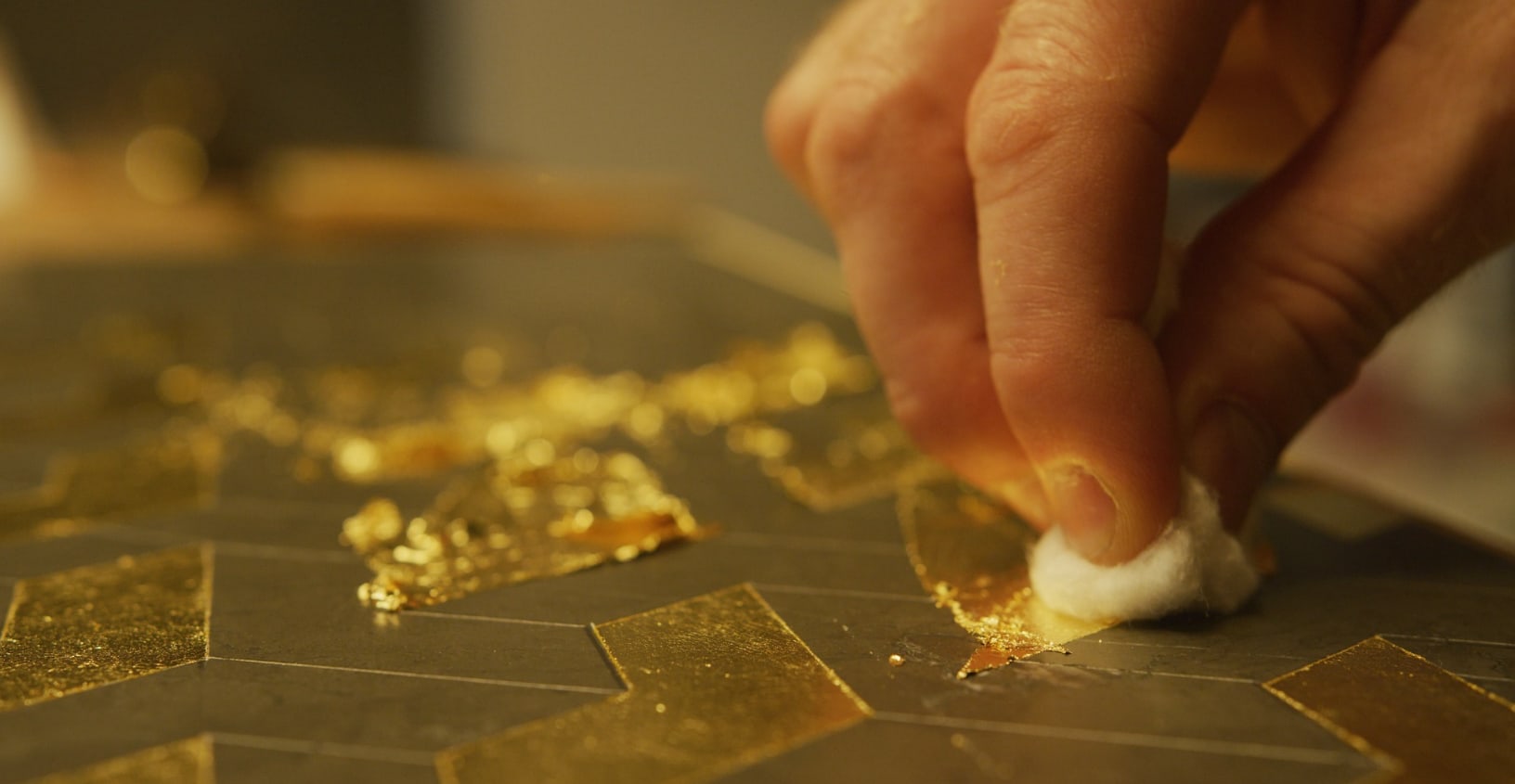
Verre églomisé — French for gilded glass — is the art of applying a design and gold leaf to the reverse of a panel, so the work is read through the glass face. The craft predates the Roman era, with examples surviving from over two thousand years ago. Its name comes from Jean-Baptiste Glomy (1711–1786), the French decorator who revived it in the eighteenth century.
The leaf is fixed with a gelatin-and-water size that dries clear and draws the metal down onto the glass. Laid this way the gild reads as a mirror; an oil-based size gives a matte finish instead. It is always cold work — never kiln-fired — and the design is engraved back through the leaf, or reverse-painted before gilding, highlights first.
Origin
Pre-Roman · 2,000+ years
Named for
J-B Glomy, 1711–1786
Method
Reverse gild · back of glass
Work
Cold-worked, not fired
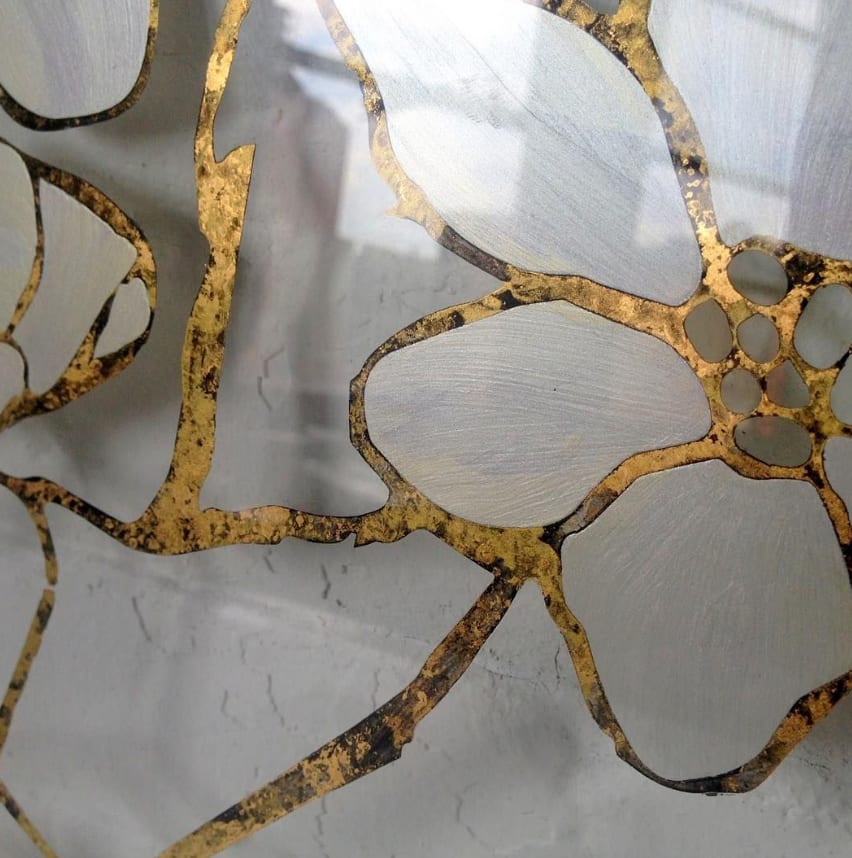
Finished panel · distressed gold on glass
02 — Gold leaf
24k gold leaf.
We lay natural and designer textures into glass with 24k gold leaf, then bring them up with backlighting and UV photopolymerization for a finish that exists nowhere else. Leaf is cut to squares and set edge to edge; the fine seams between them form the authentic grid line that marks hand-laid work. Larger leaves are harder to place — the discipline is in the joins.
Once the leaf is down and dry it turns to a mirror through the glass. Gold is the classic; copper and silver extend the range, distressed or left bright. The original skill is rare. We pair it with modern process so a finish repeats exactly to a client's specification.
Leaf
24k gold · copper · silver
Size
Gelatin (bright) / oil (matte)
Pattern
Squared leaf · grid line
Finish
Bright, distressed or antiqued
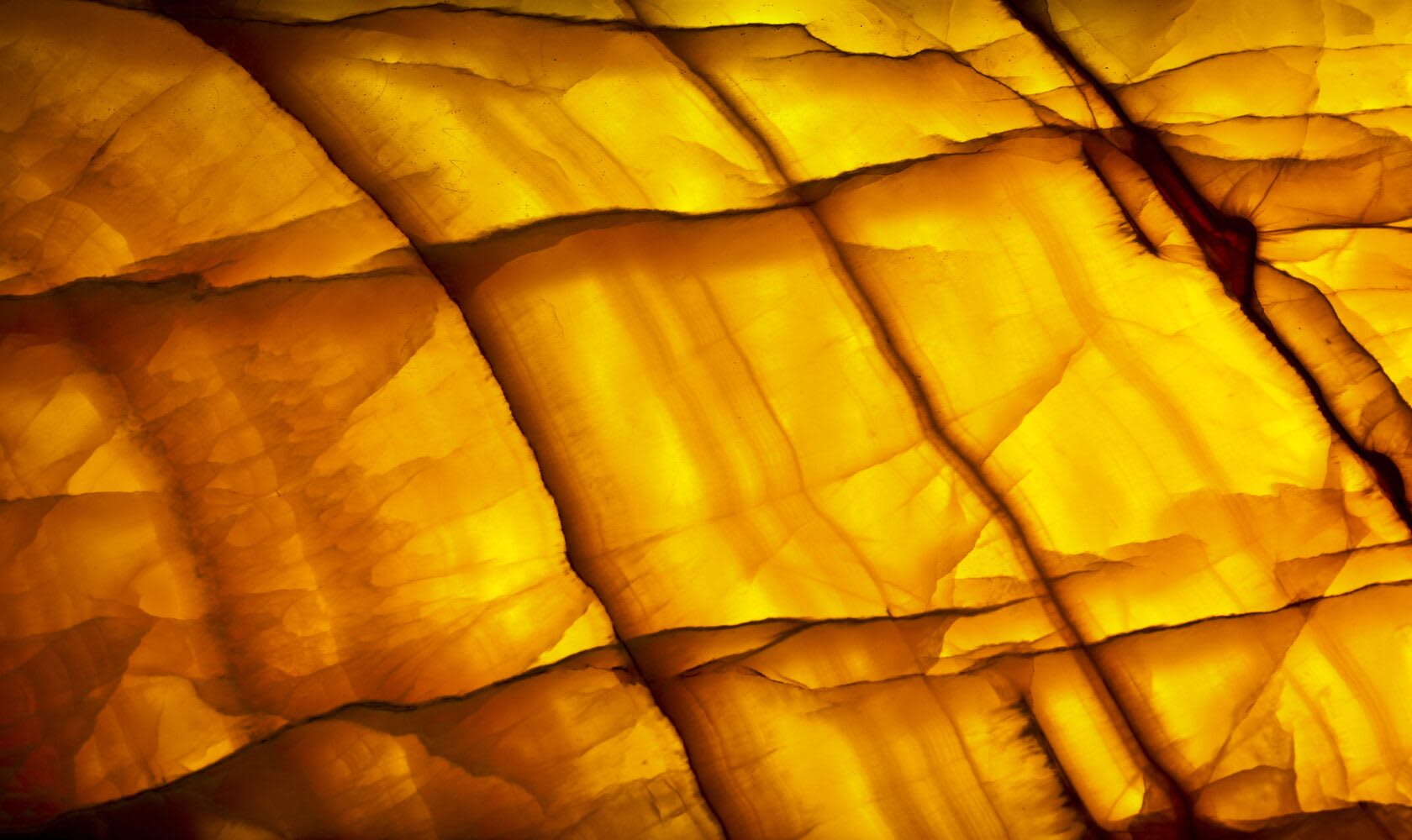
Backlit translucent panel · onyx-like glow
03 — Backlighting
Light behind glass.
Lit from behind, textured and translucent glass takes on the depth of backlit onyx — veining and grain that stay invisible until the light comes up. LED sheets or a dense grid sit behind the panel; an opal-acrylic diffusion layer and a measured standoff erase hotspots, so the eye reads an even glow, not the lamps.
Colour temperature sets the mood — warm at 2,700–3,000 K, neutral toward 4,000 K — and high-CRI diodes hold the material's true colour. Dimmable and RGBW options tune brightness and hue on demand; the diodes run cool, efficient, and rated past 50,000 hours.
Source
LED sheet / dense grid
Colour temp
2,700–4,000 K · CRI 90+
Diffusion
Opal acrylic · hotspot-free
Control
Dimmable · RGBW · DALI/DMX
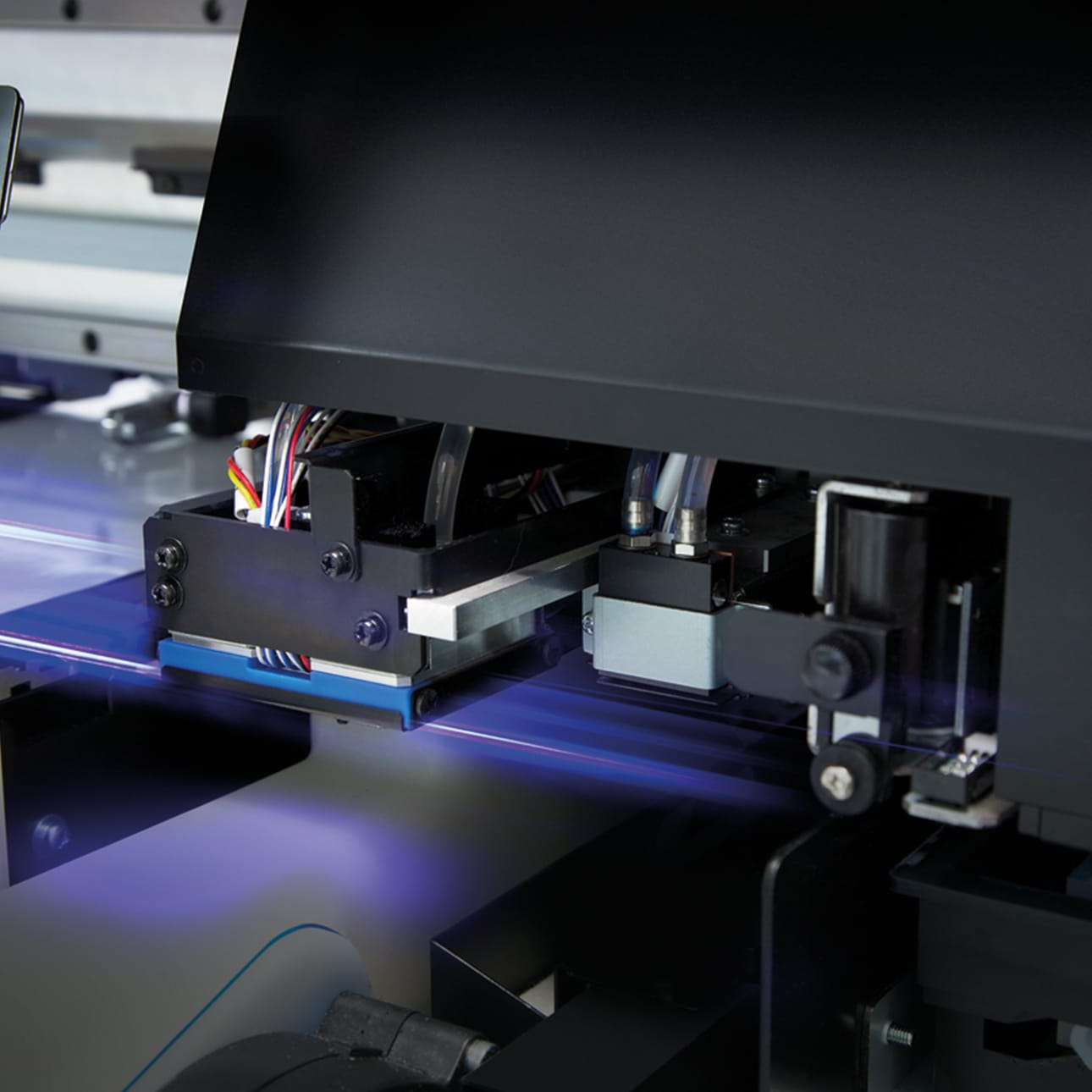
UV flatbed cure · ink fixed on the pass
04 — UV photopolymerization
Cured by light.
UV photopolymerization cures a photosensitive ink with ultraviolet light, turning liquid to solid film in a fraction of a second. Photoinitiators absorb the UV and trigger a chain reaction; the monomers cross-link into a dense three-dimensional polymer that bonds to the glass and resists scratching.
The panel is cleaned, primed where the glass demands it, and printed on a flatbed — the lamp fixes each pass on the spot. It prints sharp, saturated and durable on clear, frosted, tinted or mirrored glass, and because the inks are solvent-free and low-VOC, the process is clean and fast.
Cure
UV ≈395 nm · sub-second
Ink
Solvent-free · low-VOC
Bond
Silane primer · float side
Output
Scratch-resistant · full colour
Commissions
Bring us a surface.
Gilded, backlit, printed or all three — we survey, sample and fabricate to your specification in Al Quoz, then install across Dubai and the GCC.